Why have I started grinding my teeth?
The causes of teeth grinding can be found in both the mouth and the soul. Bruxism can be related to dry mouth, reflux disease, even sleep apnea. On the other hand, stress and hectic life events can also provoke it. Coffee, alcohol and nicotine products aggravate the problem. The tendency also seems to be to some extent hereditary, says Erkki Ebeling.
Typically, even severe bruxism is reduced on holiday.
How is the condition diagnosed?
A dentist can often recognise a teeth grinder at the door, namely by the swollen bite muscles, Erkki laughs. The diagnosis is confirmed in the consultation when the patient reports suffering from headaches, tightness, tension and pressure, sometimes even limited movement in the jaw area. There is also often wear and tear on the teeth.
A lot of people who suffer from bruxism say they can't seem to get their neck and chin zones to relax.
How does a dentist treat a grinder?
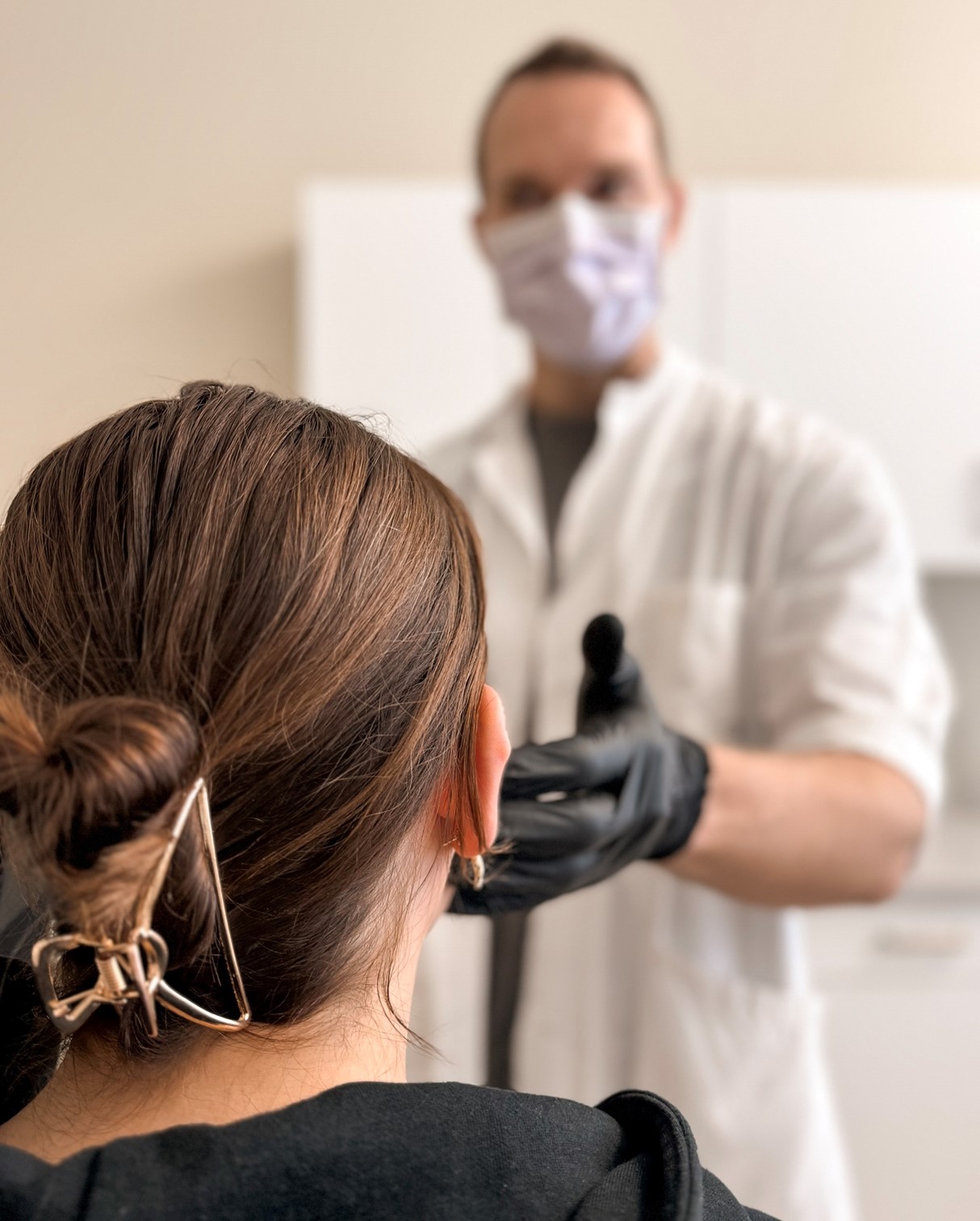
- Starting with an initial study. I examine and feel the zones, we talk about the symptoms and the duration of the symptoms, Erkki describes the first moments of the visit.
- As a dentist, I also assess the teeth—checking the bite and looking for signs of wear caused by grinding. The next step is determining the right treatment. In many cases, Botox is the most effective immediate solution to stop bruxism. Many patients already have a bite guard, which should still be used after Botox. Together, Botox and a bite guard form a powerful, complementary combination for managing teeth grinding.
A bite guard shields your teeth and joints, but Botox tackles bruxism at the source. By relaxing the bite muscles with botulinum, grinding simply becomes impossible, says dentist Erkki Ebeling.
What if your teeth have been damaged by grinding?
Ebeling Beauty and Ebeling Dentists operate under one roof. Erkki Ebeling works in both, and it's easy for him to refer a botox patient onwards if necessary. If botulinum treatment alone is not enough, the overall treatment can be continued in the general dentist's office. In some cases, the best help can be found in the offices of a dentist specialising in bite physiology or orthodontics.
Ebeling Beauty's seamless collaboration with Ebeling Dentists is in the patient's best interest. If a patient needs treatment other than botox, it is easy to find it under one roof.
Are teeth grinding and ADHD related? And can iron deficiency cause teeth grinding?
- On a guesswork basis, I would say that ADHD and teeth grinding may be linked. In fact, extensive research supports this view. Bruxism is also mentioned in the side effect lists of some ADHD medications," Erkki says.
The link between iron deficiency and bruxism is a bit obscure, according to Erkki. But he does not think the link is impossible; it may well be due to nutrient deficiencies.
My spouse tells me that I grind my teeth at night, but it doesn't bother me a bit. Should I treat my teeth grinding if it's not causing any real disturbance?
"Many people come to get treatment for bruxism specifically on a so-called spouse's referral," Erkki says.
- A comment from your spouse is a good reason to go to the dentist. Constant grinding needs to be treated, even if it is not yet symptomatic in everyday life.
If left untreated, teeth will wear down and become damaged over time - sometimes severely.
Is V-shape botox the same as bruxism treatment?
- It's partly the same treatment, but there are differences, Erkki says.
- In both treatments, the muscles that bite the cheeks are usually reduced. However, the botulinum treatment for teeth grinding is more extensive than the so-called V-shape botox. Facial slimming is done by injecting botox into the masseter muscles at the corners of the jaw. In the bruxism treatment, botox is injected into all the masseter and temporalis muscles. If necessary, the muscles of the neck and shoulders are also treated.
- Bruxism treatment is done for medical reasons. It is therefore priced differently from Botox treatments for aesthetic reasons.