Tattoo Removal reviews
Laser Tattoo Removal
About 10–20% of Finns have tattoos. Some are small, some are large; they’ve been done at different stages of life and in various styles. When getting a tattoo, at least my own mother usually reminds me that the image on my skin will be there forever. Most people are happy with their tattoos, but sometimes a design that hasn’t aged well or was done on a whim can lead to regret later on. That’s when tattoo removal comes to mind.
What was your experience with tattoo removal?
There are two main methods for tattoo removal: surgical and laser. The surgical method can be used to remove small designs, and in practice, this involves cutting out the affected area of skin. After the excision, the skin is stretched and sutured back together. Aftercare is similar to that for any wound, and, naturally, a scar remains as a reminder of the surgical removal. Surgical removal of large tattoos is not as straightforward and may even require skin grafts. In such cases, recovery also takes longer.
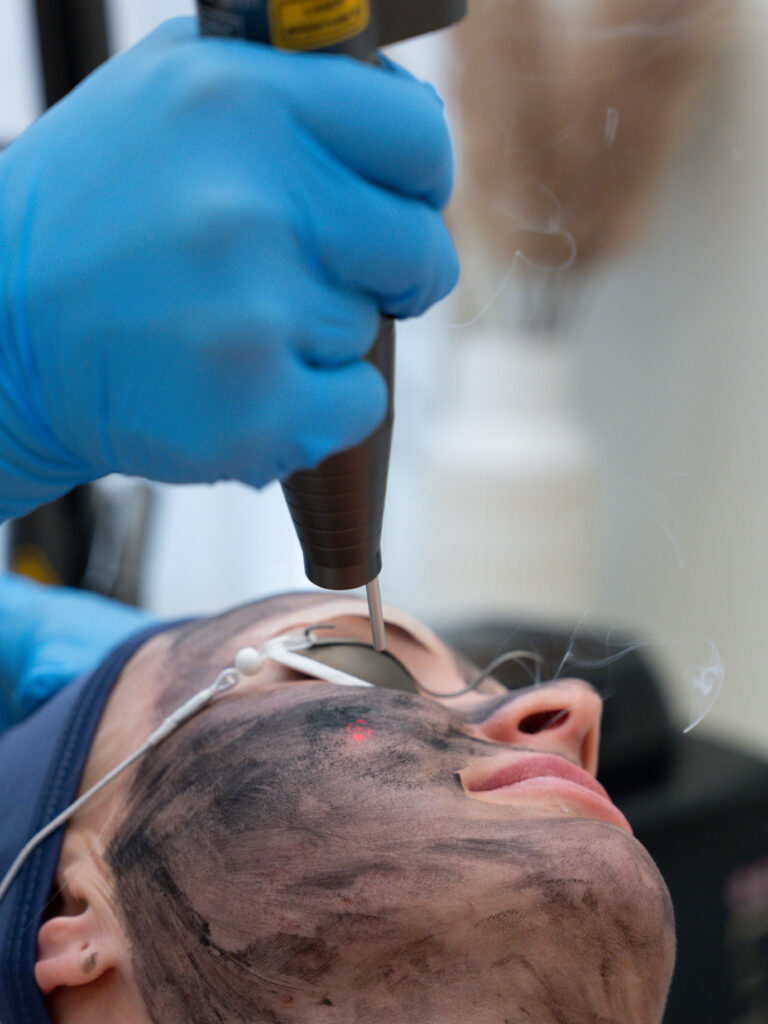
A tattoo can also be removed with a laser. The laser beam is absorbed by the pigment in the tattoo, breaking it down, and the body takes care of the rest: the broken-down pigment is eliminated from the body through metabolism. The laser beam does not damage the skin, so no scars form. Recovery time is short, and aftercare is simple: keep the skin clean and protect it from the sun. You should avoid swimming and saunas until the skin has healed. Funny enough, the aftercare instructions aren’t much different from those for a tattoo! However, getting a tattoo or having one removed isn’t completely painless; many people find laser treatment more painful than getting a tattoo.
It is easiest to remove black ink from light-colored skin. The black color “absorbs” the wavelength emitted by the laser. Removing white tattoos with a laser is nearly impossible, because the white color reflects the laser beam back instead of absorbing the wavelength.
What happens during tattoo removal?
All tattoo removal procedures always begin with a preliminary consultation at the Ebeling Kauneus clinic in Kalasatama. Since many factors influence the success of tattoo removal, it is important for us to know, among other things:
- tattoo size
- colors used
- age of the tattoo
- the client's general state of health.
It’s also important for us to see if your tattoo has scarred. Poor aftercare or a tattoo that’s been inked too deeply into the skin can contribute to scarring. In some people, the skin forms keloids, which are excessive scar tissue growths. In such cases, getting a tattoo or having a tattoo removed can trigger keloid formation.
After the consultation, it’s time to schedule an appointment for tattoo removal. All laser procedures have contraindications—that is, situations in which treatment cannot be performed or requires special caution. Contraindications related to tattoo removal include, among others:
- acute inflammation of the skin
- skin cancer
- Use of self-tanning products
- sun-damaged skin (tanned, sunburned)
- the keloid phenomenon
- diabetes that is poorly controlled
If everything looks good, we can move on to tattoo removal!
The appointment begins with numbing the area of skin to be treated. If you wish, you can apply a numbing cream (Emla, available at pharmacies) on your own before arriving at the clinic, 1–2 hours before your appointment. The cream numbs the surface of the skin, thereby reducing the burning and stinging sensations you may feel during tattoo removal. However, the cream does not make the skin completely numb. Cold therapy is also used during laser treatment to relieve pain. Cold air is blown onto the skin to alleviate any discomfort during the procedure.
The skin area is treated with a laser spot by spot: the ink is removed in tiny dots. The most significant change in tattoo removal occurs specifically after the first laser session, as this is when the laser easily locates its target and “blasts” the color pigment in the skin. Once the tattoo has faded significantly (due to age or previous laser treatments), results develop more slowly. Complete tattoo removal may require as many as 7–10 treatment sessions, and even then, completely clear skin is not guaranteed.
Immediately after treatment, zone treated zone and swollen. You can care for the area by regularly applying Basibact ointment, which helps prevent skin inflammation. It is common for blisters to form on the treated area, and you must not pop any blisters that form. The skin may feel tight, but this can be alleviated by lightly moisturizing it with a basic moisturizer.
You can schedule a new appointment 6–8 weeks from now. Your skin must be fully healed before scheduling a new laser appointment.
A tattoo continues to fade even after laser treatment, sometimes for months. However, the factors affecting tattoo fading vary from person to person, as metabolism plays a major role in how quickly a tattoo fades and how much it continues to fade after treatment.
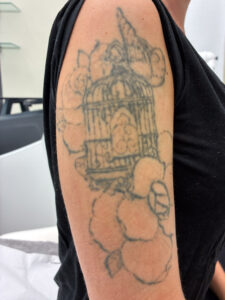
The customer's tattoo had already been removed with a laser twice before. The third laser treatment was performed at Ebeling Kauneus using the Hollywood Spectra laser.
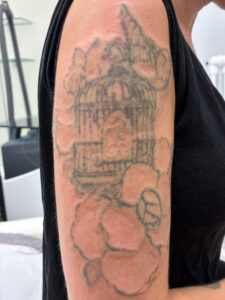
The photo was taken immediately after the treatment. The skin shows redness and swelling.
“I applied Basibact to my skin for about three days after the laser treatment. My skin feels a little dry and tight, but I didn’t get any blisters. The redness lasted a couple of days. I’m continuing with my tattoo removal at Ebeling Kauneus.”